YEAR-END ACCOUNTS

Our year-end accounts service
IPA Bookkeeping & Accounting Ltd prepares year-end accounts for sole traders, partnerships and small limited companies within our agreed service scope.
Year-end accounts can be prepared from bookkeeping records that we maintain for you as part of our ongoing bookkeeping service. If your bookkeeping is behind, incomplete or needs correcting, we can also complete the necessary catch-up or clean-up bookkeeping first and then prepare your year-end accounts from the updated records.
For sole traders and partnerships, we can prepare year-end accounts and use the relevant figures when preparing your Self Assessment Tax Return, where this service has been agreed.
For small limited companies, we can prepare year-end accounts within our service scope. However, we do not prepare or submit Corporation Tax Returns (CT600) or file Confirmation Statements. A separate accountant or tax adviser may therefore be required for the company's Corporation Tax compliance and any services outside our agreed scope.
The company's directors remain responsible for approving the accounts and ensuring that the company's statutory filing and tax obligations are met.

Bringing Your Financial Records Together
Year-end accounts summarise your business income, expenses, assets and liabilities for the accounting period.
They help you understand how your business has performed and provide the figures needed for your Self Assessment or Partnership Tax Return.
For limited companies, year-end accounts may also be required for Companies House and Corporation Tax purposes.
We prepare year-end accounts for sole traders and partnerships. We can also support small limited companies with their year-end bookkeeping and accounts preparation, but we do not prepare or submit Corporation Tax Returns (CT600s).
We Start by Understanding Your Business
Before beginning the work, we confirm:
- your business structure;
- the accounting period being prepared;
- the services you require;
- the applicable filing deadlines;
- the accounting software or records you use; and
- whether your bookkeeping is complete and up to date.
Understanding your business helps us identify what information will be required and whether any bookkeeping needs to be completed or corrected first.
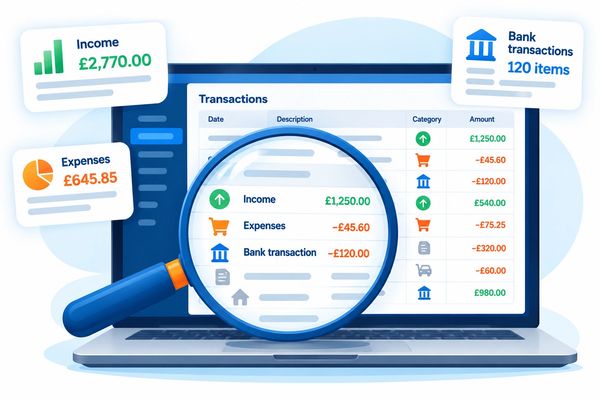
We Review Your Bookkeeping Records
We review the records provided and check that the transactions appear complete and have been recorded in the appropriate categories.
This may include reviewing:
- sales and other business income;
- purchases and business expenses;
- bank and credit-card transactions;
- business assets and equipment;
- loans and finance agreements;
- VAT records, where applicable; and
- amounts introduced or withdrawn by the business owner or partners.
If the bookkeeping is incomplete or requires correction, we will explain what additional work may be needed before the accounts can be prepared.
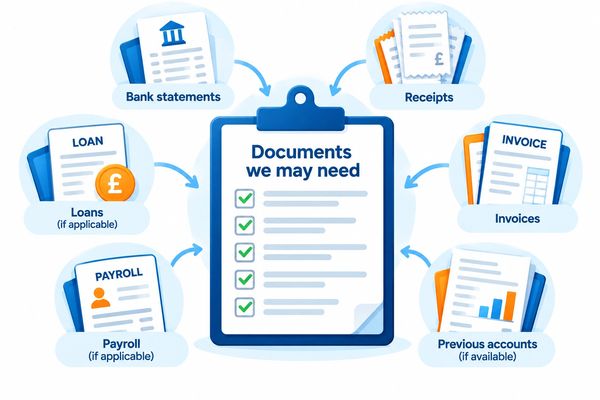
What We Need From You
The information required will depend on your business, but may include:
- access to your accounting software;
- business bank and credit-card statements;
- sales invoices and income records;
- purchase invoices and receipts;
- details of cash transactions;
- loan, hire-purchase and finance statements;
- mileage and business-use information;
- payroll or subcontractor records;
- details of equipment or other assets purchased or sold;
- stock figures at the year end, where applicable;
- your previous year’s accounts;
- your last submitted Self Assessment or Partnership Tax Return; and
- VAT Returns for the relevant period, where applicable.
We will provide a tailored information request so you know exactly what is needed.
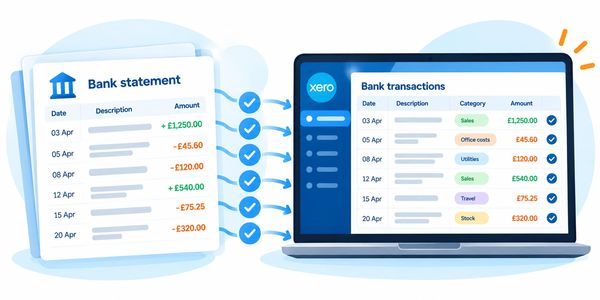
We Reconcile the Records
Where appropriate, we reconcile the balances in your bookkeeping records to supporting documents such as bank statements, credit-card statements, loan statements and VAT Returns.
This helps us identify:
- missing or duplicated transactions;
- incorrect balances;
- transactions recorded in the wrong category;
- payments that require clarification; and
- differences that should be investigated before the accounts are completed.
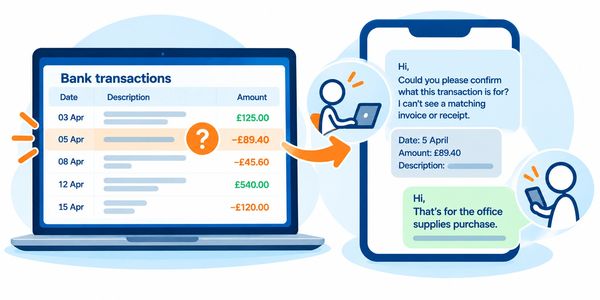
We Identify Questions as We Work
Sometimes a transaction cannot be identified correctly from the information available.
We will send you a clear list of questions and explain what information we need. Answering these questions promptly helps us complete your accounts accurately and avoid unnecessary delays.
If you are unsure about a transaction, tell us what you know and we will help you work through it.
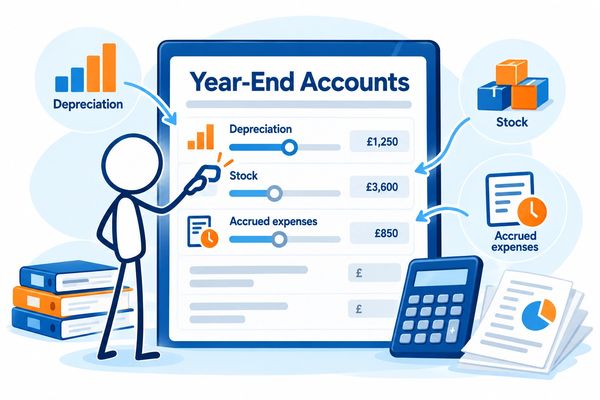
Year-End Adjustments
Year-end accounts may require adjustments that are not normally included in the day-to-day bookkeeping.
Depending on your business, these could include:
- depreciation of business assets;
- prepayments and accrued expenses;
- stock or work in progress;
- business use of personally owned items;
- private use of business expenses;
- outstanding income or expenses; and
- corrections identified during our review.
We will only make adjustments that are supported by the information available and relevant to your business.
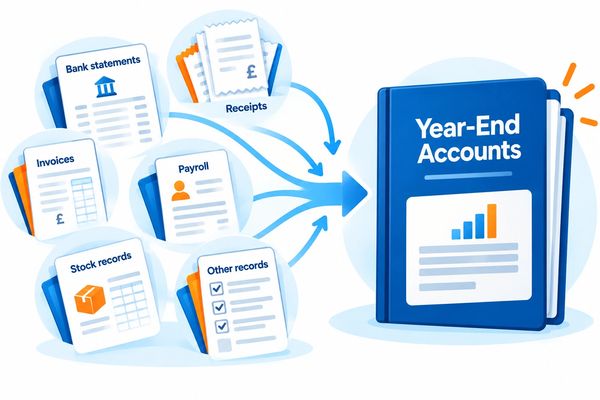
We Prepare Your Year-End Accounts
Once the records have been reviewed, reconciled and completed, we prepare the year-end accounts.
For a sole trader, the accounts will normally show the business’s income, allowable expenses and resulting profit or loss.
For a partnership, the accounts will also show how the profit or loss is shared between the partners.
The final figures can then be used to prepare the relevant Self Assessment or Partnership Tax Returns.
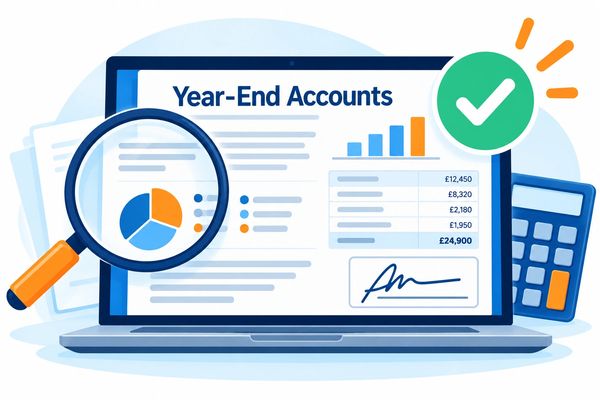
You Review and Approve the Figures
Before the accounts are finalised, you will have an opportunity to review them and ask questions.
We will explain the main figures and highlight any points that need your attention. You remain responsible for confirming that the information provided is complete and accurate and for approving the final accounts.
Year-End Accounts and Self Assessment
Year-end accounts and a Self Assessment tax return are connected, but they are not the same document.
The accounts calculate the profit or loss from your business. The relevant figures are then included in your Self Assessment tax return together with any other taxable income, allowances or claims.
If you ask us to prepare both, we can complete the bookkeeping, year-end accounts and Self Assessment as one coordinated service.
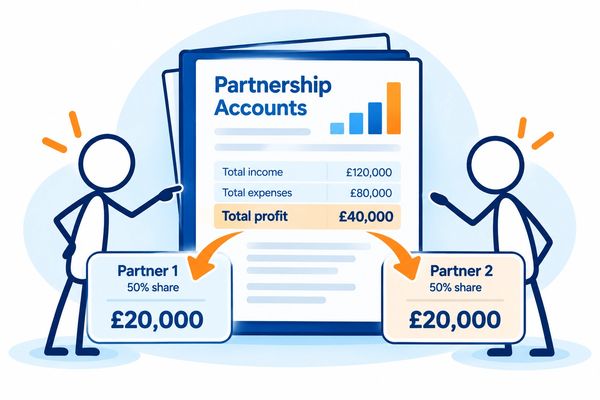
Year-End Accounts for Partnerships
A partnership normally needs accounts showing the partnership’s overall income, expenses and profit or loss.
The profit or loss is then allocated between the partners according to the partnership agreement. These figures support the Partnership Tax Return and each partner’s individual Self Assessment tax return.
The nominated partner remains responsible for the partnership’s tax return and business records.

Support for Small Limited Companies
We can help small limited companies maintain and complete their bookkeeping and prepare the records and year-end information required by their accountant.
Where agreed, we may also prepare year-end accounts. However, we do not prepare or submit Corporation Tax Returns (CT600s), and the company may therefore need a separate accountant or tax adviser for its Corporation Tax compliance.
Directors remain responsible for approving the company’s accounts and ensuring all filing obligations are met.
Private limited companies normally have nine months after their financial year ends to file annual accounts with Companies House. Different deadlines apply to first accounts and some other circumstances.
Keeping Your Records
Completing your year-end accounts does not remove your responsibility to retain the supporting business records.
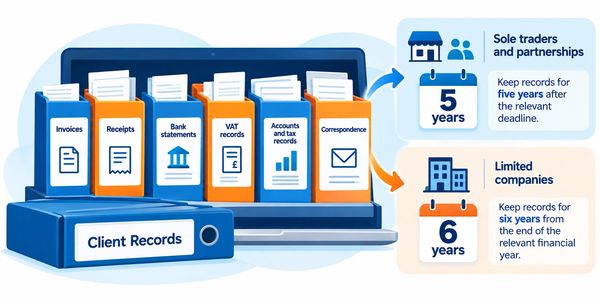
Sole traders and partnerships generally need to keep their business records for at least five years after the 31 January submission deadline for the relevant tax year. Small limited companies generally need to keep their accounting records for six years from the end of the last company financial year the records relate to. Some records may need to be kept longer, for example where HMRC is carrying out a check or a transaction spans several accounting periods.
These records may include invoices, receipts, bank statements, mileage records, payroll information and other documents supporting the figures in the accounts.
The five-year and six-year periods agree with current GOV.UK guidance.