MAKING TAX DIGITAL FOR INCOME TAX

Helping you prepare for a new way of reporting to HMRC
Making Tax Digital for Income Tax changes how some sole traders and landlords keep their financial records and report information to HMRC.
Instead of organising everything only after the end of the tax year, those affected must keep digital records, use compatible software and send regular updates throughout the year.
We can help you understand when the requirements apply, prepare your records and establish a practical bookkeeping routine.
If you prepare your accounts from 1 April to 31 March, you may choose to use calendar update periods. Your first update would cover 1 April to 30 June and must be submitted by 7 August. Your second would cover 1 April to 30 September and must be submitted by 7 November, followed by 1 April to 31 December, due by 7 February, and 1 April to 31 March, due by 7 May.
This option must be selected in your compatible software before submitting your first quarterly update.
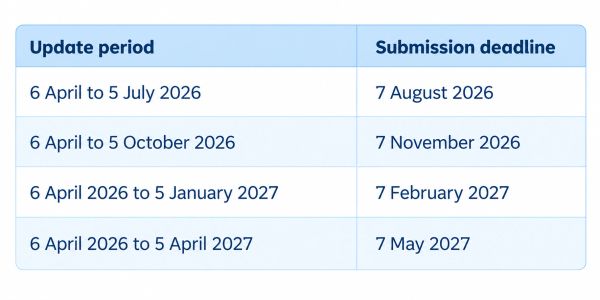
The information and examples on this page use the standard update periods, which run from 6 April to 5 July, 6 April to 5 October, 6 April to 5 January and 6 April to 5 April.
The submission deadlines remain the same whether you use standard or calendar update periods.
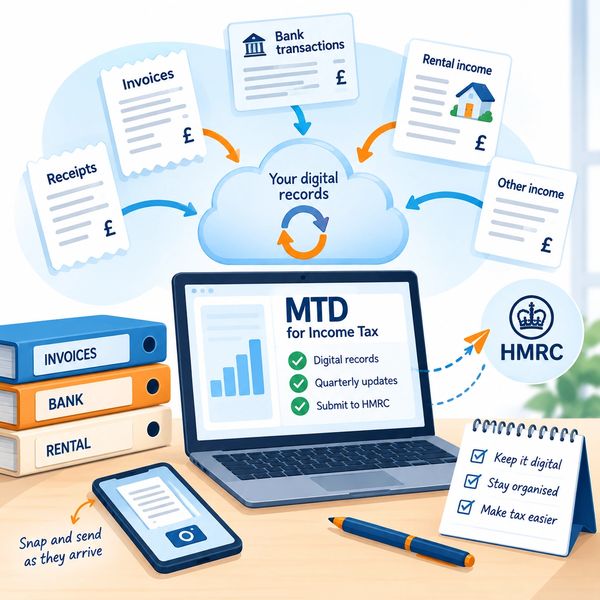
What is Making Tax Digital for Income Tax?
Making Tax Digital for Income Tax—often shortened to MTD for Income Tax—is HMRC’s digital reporting system for individuals with income from self-employment or property.
If MTD applies to you, you will need to:
- maintain digital records of your income and expenses;
- use compatible bookkeeping software;
- submit quarterly summaries to HMRC; and
- complete your tax return through compatible software.
MTD does not mean completing four additional tax returns. However, it does mean that your bookkeeping must be maintained throughout the year.

Who will need to use MTD for Income Tax?
The current requirements primarily apply to individuals registered for Self Assessment who receive income as:
- sole traders;
- landlords with UK property income;
- landlords with foreign property income; or
- individuals with both self-employment and property income.
The rules are based on your total qualifying income.
Partnerships are not currently required to use MTD for Income Tax. HMRC will confirm separately when the requirements will be extended to partnerships.

When will you need to start?
MTD for Income Tax is being introduced in stages.
You are required to use it from:
- 6 April 2026 if your qualifying income for 2024/25 was more than £50,000;
- 6 April 2027 if your qualifying income for 2025/26 is more than £30,000; or
- 6 April 2028 if your qualifying income for 2026/27 is more than £20,000.
HMRC may write to you if its records indicate that you are required to use MTD. However, it remains your responsibility to check whether the requirements apply and make sure you are prepared.
What is qualifying income?
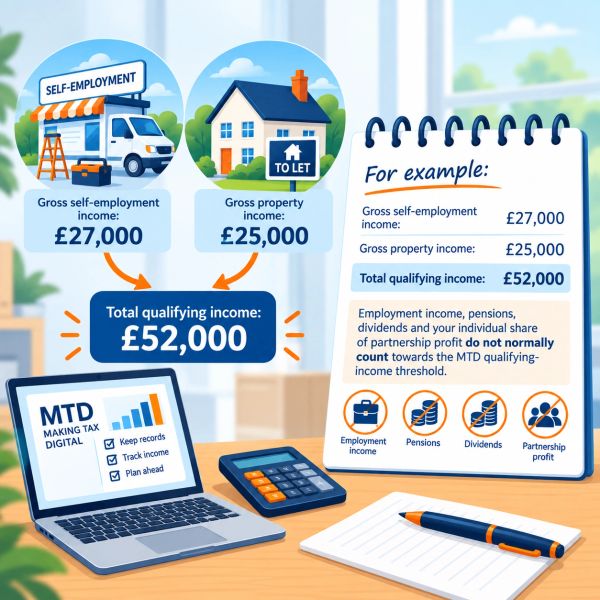
Qualifying income is generally your total gross income from self-employment and property before expenses.
It is based on income or turnover—not profit.
If you have more than one source of self-employment or property income, the relevant amounts are normally combined.
For example:
- gross self-employment income: £27,000;
- gross property income: £25,000; and
- total qualifying income: £52,000.
Employment income, pensions, dividends and your individual share of partnership profit do not normally count towards the MTD qualifying-income threshold.
About Us
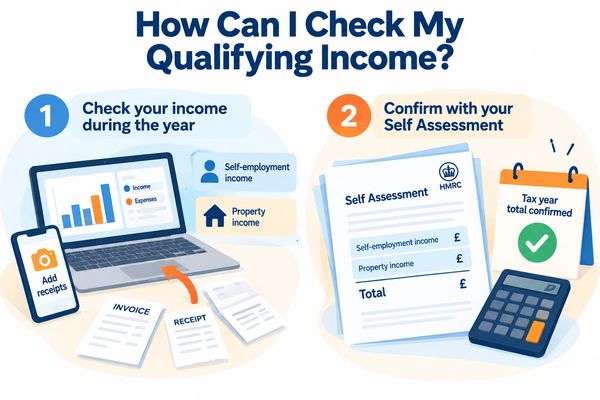
How Can I Check My Qualifying Income?
Your qualifying income is generally your total gross income from self-employment and property before expenses.
If you have more than one business or receive income from more than one property source, the relevant amounts are normally added together.
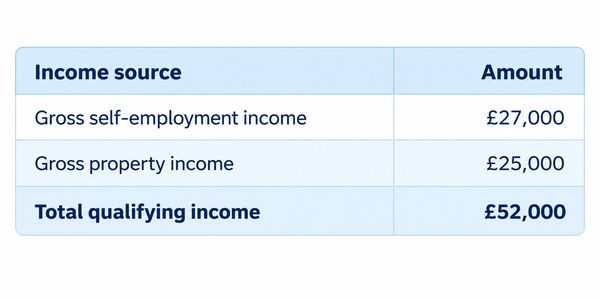
For example:
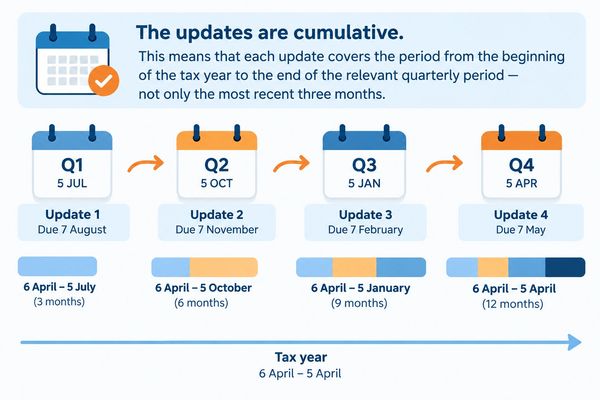
The updates are cumulative. This means that each update covers the period from the beginning of the tax year to the end of the relevant quarterly period—not only the most recent three months.
What will you need to do?
If MTD for Income Tax applies to you, you will need to:
- Use compatible software
Your records must be kept using software capable of working with HMRC’s MTD system. - Maintain digital records
Your business or property income and expenses must be recorded electronically. - Send quarterly updates
Summary totals from your records must be submitted to HMRC every three months. - Complete the year-end process
Your records must be reviewed, corrections and tax adjustments made, and your tax return submitted through compatible software.
How will quarterly updates work?
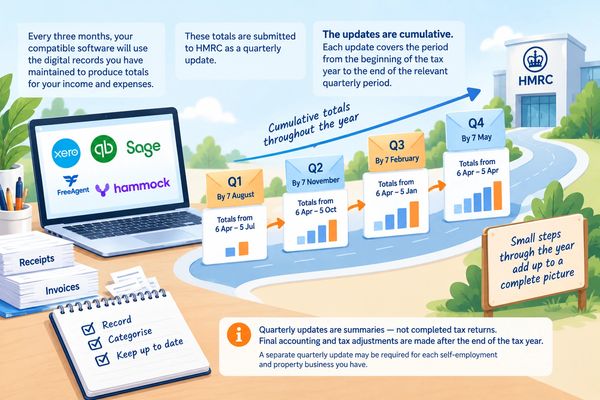
Every three months, your compatible software will use the digital records you have maintained to produce totals for your income and expenses.
These totals are submitted to HMRC as a quarterly update.
The standard submission deadlines are:
- 7 August
- 7 November
- 7 February
- 7 May
A separate quarterly update may be required for each self-employment and property business you have.
Quarterly updates are summaries—not completed tax returns. Final accounting and tax adjustments are made after the end of the tax year.
Why regular bookkeeping will be important
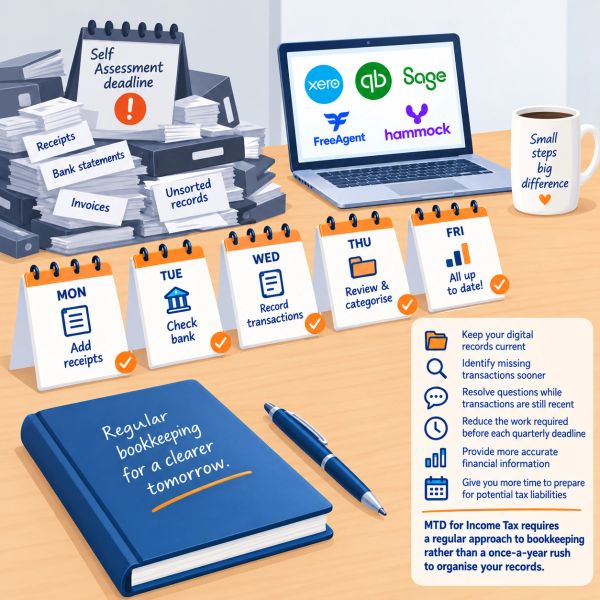
Under MTD for Income Tax, leaving all your bookkeeping until the Self Assessment deadline will no longer be a practical way to manage your records.
Regular bookkeeping helps to:
- keep your digital records current;
- identify missing transactions sooner;
- resolve questions while transactions are still recent;
- reduce the work required before each quarterly deadline;
- provide more accurate financial information; and
- give you more time to prepare for potential tax liabilities
MTD for Income Tax requires a regular approach to bookkeeping rather than a once-a-year rush to organise your records.
How Our MTD for Income Tax Service Works
We start by understanding your position
We will discuss:
- your self-employment and property income;
- your current bookkeeping arrangements;
- the software or spreadsheets you currently use;
- when MTD may apply to you; and
- the help you are likely to need.
We can also review correspondence you have received from HMRC and help you understand the next step.
We agree how we will work together
Every business and property portfolio is different, so we will agree a practical process for:
- collecting your financial information;
- providing receipts and invoices;
- accessing bank transactions;
- answering bookkeeping questions;
- maintaining your digital records; and
- preparing for quarterly deadlines.
We will explain what IPA will manage and what information we will need from you.
We select an appropriate bookkeeping system
We will review whether your current system is suitable for MTD for Income Tax.
Where a new system is needed, we can help establish compatible bookkeeping software and explain how information will be collected and maintained.
For landlords, this may include specialist property bookkeeping software such as Hammock, where it is appropriate for the portfolio and services required.
The system should support the work you need without being unnecessarily complicated.
We help get your records ready
If your records are incomplete, behind or held across several different places, we can help organise them before regular MTD reporting begins.
This may include:
- bringing bookkeeping up to date;
- reviewing opening information;
- checking bank transactions;
- identifying missing documents;
- correcting the treatment of transactions; and
- setting up appropriate income and expense categories.
Starting with properly organised records can make the ongoing MTD process much easier.
Your bookkeeping is kept up to date
We prefer to complete bookkeeping weekly where possible.
Weekly bookkeeping does not need to cost more than monthly bookkeeping, but it means:
- records contain more current information;
- missing documents can be identified sooner;
- questions can be answered while transactions are still recent;
- quarterly updates are easier to prepare; and
- there is less pressure near submission deadlines.
You will be asked to provide receipts, invoices and other information regularly rather than saving everything until the end of the quarter.
We identify questions as we go
Some transactions cannot be recorded correctly without additional information from you.
Instead of leaving questions until a quarterly or annual deadline, we will raise them as the bookkeeping progresses.
Your regular responses help us maintain accurate records and prevent unanswered questions from accumulating.
We prepare your quarterly updates
Before each quarterly update, we will:
- review the information recorded;
- check for missing transactions or documents;
- resolve outstanding bookkeeping questions;
- review the income and expense categories; and
- prepare the required totals for submission.
Quarterly updates are based on the records available at the time. Corrections and final tax adjustments can still be made later in the process.
Your records support the year-end process
Quarterly updates do not replace your final tax return.
After the end of the tax year, your records will be reviewed and any necessary accounting and tax adjustments made.
Other income, allowances and relevant personal tax information will then be added before your final tax return is submitted through compatible software.
Any tax due will normally remain payable by 31 January following the end of the tax year.

You have a clearer picture throughout the year
Regular digital bookkeeping can give you better visibility of:
- income received;
- expenses incurred;
- business or property performance;
- transactions that still need attention; and
- the amount you may need to set aside for tax.
Quarterly estimates are not final tax calculations, but maintaining accurate records throughout the year can make tax planning easier and reduce the risk of unexpected figures appearing near the payment deadline.
